
BUILDING LAND IN TICINO: HOW THE MARKET IS CHANGING AND WHAT TO CONSIDER BEFORE BUYING
29/09/2026
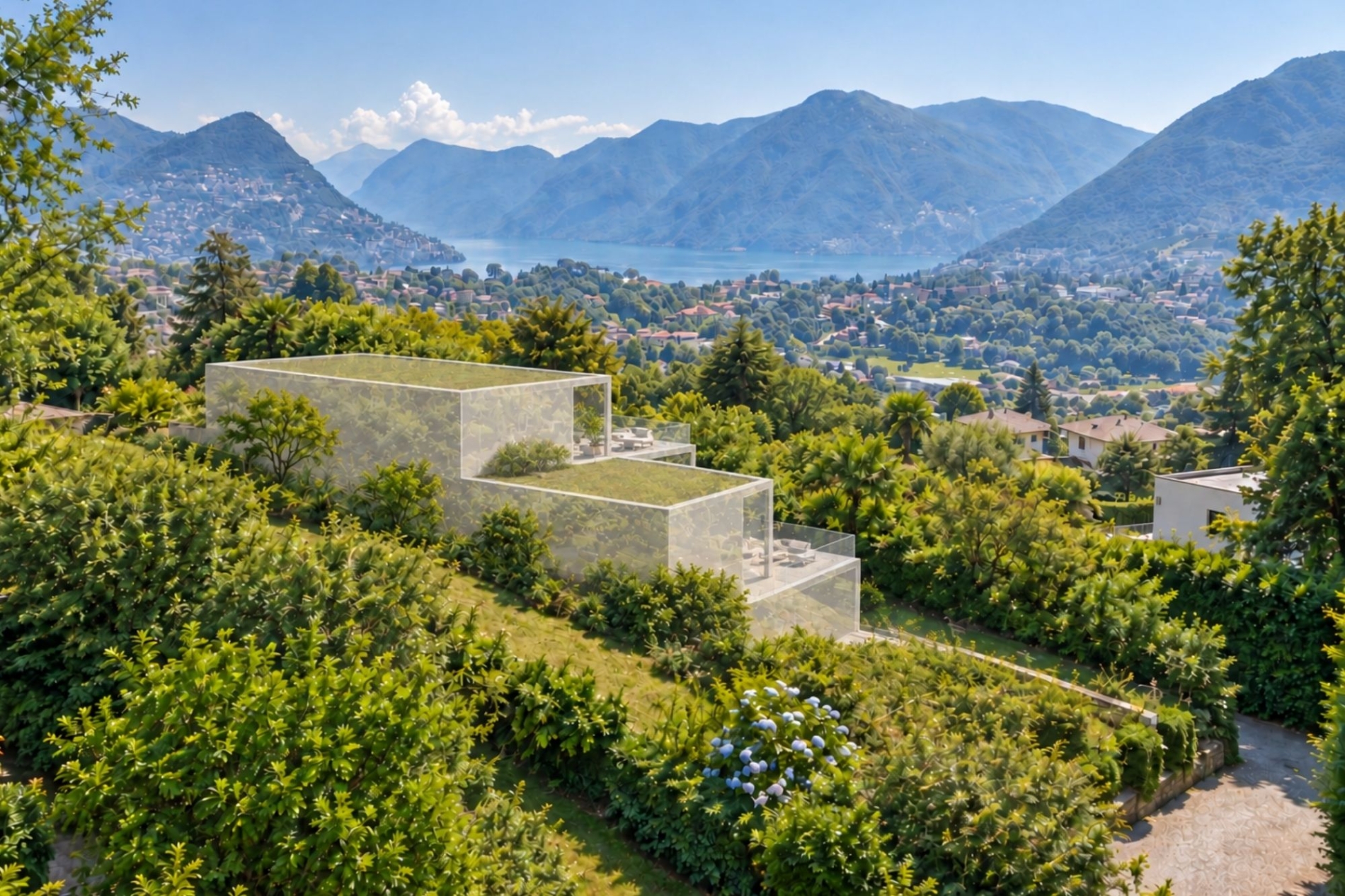
Land has always occupied a distinctive position within the real estate market. Unlike a building, it cannot simply be produced, expanded or replicated and, particularly in a geographically complex region such as Ticino, the availability of plots genuinely suitable for development is inevitably limited. For many years, this scarcity helped reinforce the perception of building land as an asset naturally capable of preserving or increasing its value over time.
Today, however, the picture has become more nuanced.
Recent data on real estate transactions in Ticino reveals an interesting trend: in the second quarter of 2026, the number of transactions involving undeveloped plots increased by 15%, while their total transaction value decreased by 1.4%, settling at approximately CHF 47.2 million. This development highlights the importance of looking beyond transaction volumes and understanding what can actually be developed on a specific plot.
Planning regulations play a central role in this assessment. A plot classified as building land should not automatically be considered a site on which any type of project can be developed. Planning parameters, restrictions, development ratios, the characteristics of the individual plot and potential changes to local planning rules can significantly influence what can realistically be built and, consequently, the economic value of the land.
For buyers, land therefore represents more than simply a certain number of square metres. It represents the potential for a future project. Increasingly, it is the actual ability to turn that potential into a viable property that determines its value.
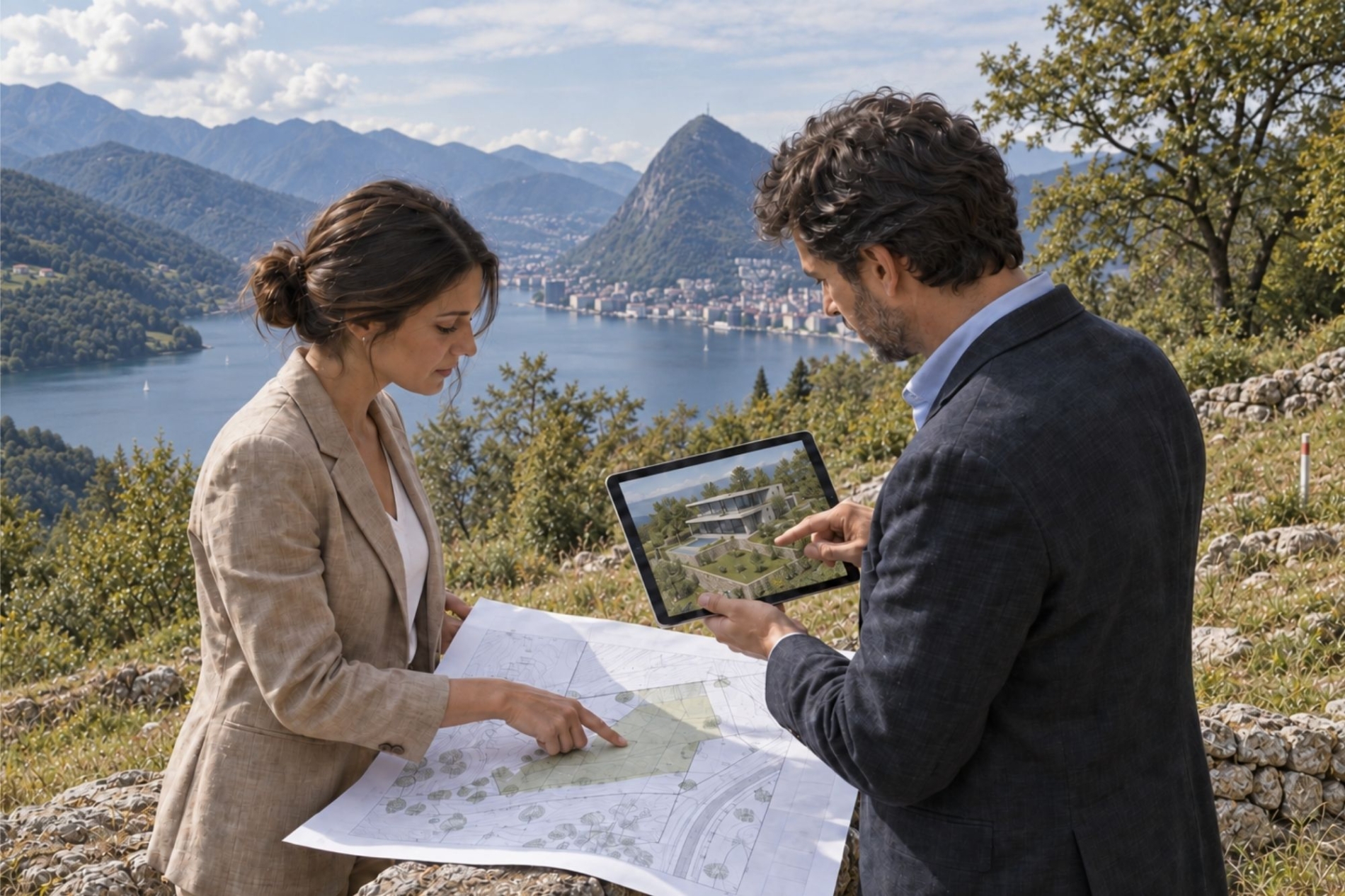
From plot to project: why preliminary due diligence matters
Buying a plot of land on which to build your own home retains a unique appeal. It provides the opportunity to start from scratch and design a property around individual requirements, choosing its architecture, materials, energy performance, relationship with the surrounding landscape and internal layout.
In Ticino, this opportunity can be particularly attractive. The region's distinctive topography makes it possible, in certain locations, to create homes that are closely integrated with the landscape: villas designed around the natural slope of the land, large windows facing the lake or mountains, panoramic terraces, gardens and architectural solutions conceived to make the most of orientation and natural light.
Before purchasing, however, it is essential to understand precisely what can actually be built.
The total surface area of the plot is only the starting point. Development ratios, required distances, permitted building heights, accessibility, easements, topography and the costs involved in preparing the site for construction must all be considered. A sloping plot, for example, may offer an exceptional view, but it can also require significantly different structural works and site preparation compared with a level plot.
The planning context adds another layer of complexity. Uncertainty surrounding development potential can directly influence the price buyers are prepared to pay. It is therefore not surprising that, in some transactions, a purchase may be made conditional upon obtaining planning permission or completing more extensive preliminary assessments.
This evolution makes due diligence an increasingly important part of the process. Even before discussing price, it is essential to establish the property's true development potential.
A more selective market can create new opportunities
The decline in the total transaction value of undeveloped land should not automatically be interpreted as a general loss of interest in this type of asset. Rather, the figures suggest a more selective market, where buyers and investors are paying greater attention to the distinction between plots with clear development potential and those characterised by greater uncertainty.
This reflects a broader trend across the Ticino real estate market in 2026. The overall number of transactions in the second quarter remained broadly stable compared with the same period of the previous year, while their total value fell by 13.3% to approximately CHF 1.131 billion. The decline was particularly significant among higher-value transactions, especially those exceeding CHF 5 million.
This does not necessarily mean that buyers have stopped looking for properties or investment opportunities. Instead, the relationship between asking price and perceived value is being examined more carefully.
The same principle applies to land. A well-located, appropriately priced plot with clear planning parameters and a realistically achievable development project can still represent an attractive opportunity. Conversely, where greater uncertainty exists, the market tends to reflect that uncertainty in its valuation.
For investors, this environment can also create new possibilities. Identifying a plot with favourable characteristics, correctly assessing its potential and developing a project aligned with local demand can create value throughout the entire real estate process. This also means, however, that the investment needs to be evaluated as a whole: land acquisition, design, construction, financing, planning timelines and the eventual market value of the completed property.
The key question is therefore no longer simply, “How much does this land cost per square metre?” but rather, “What can be developed here, and what could it be worth once completed?”
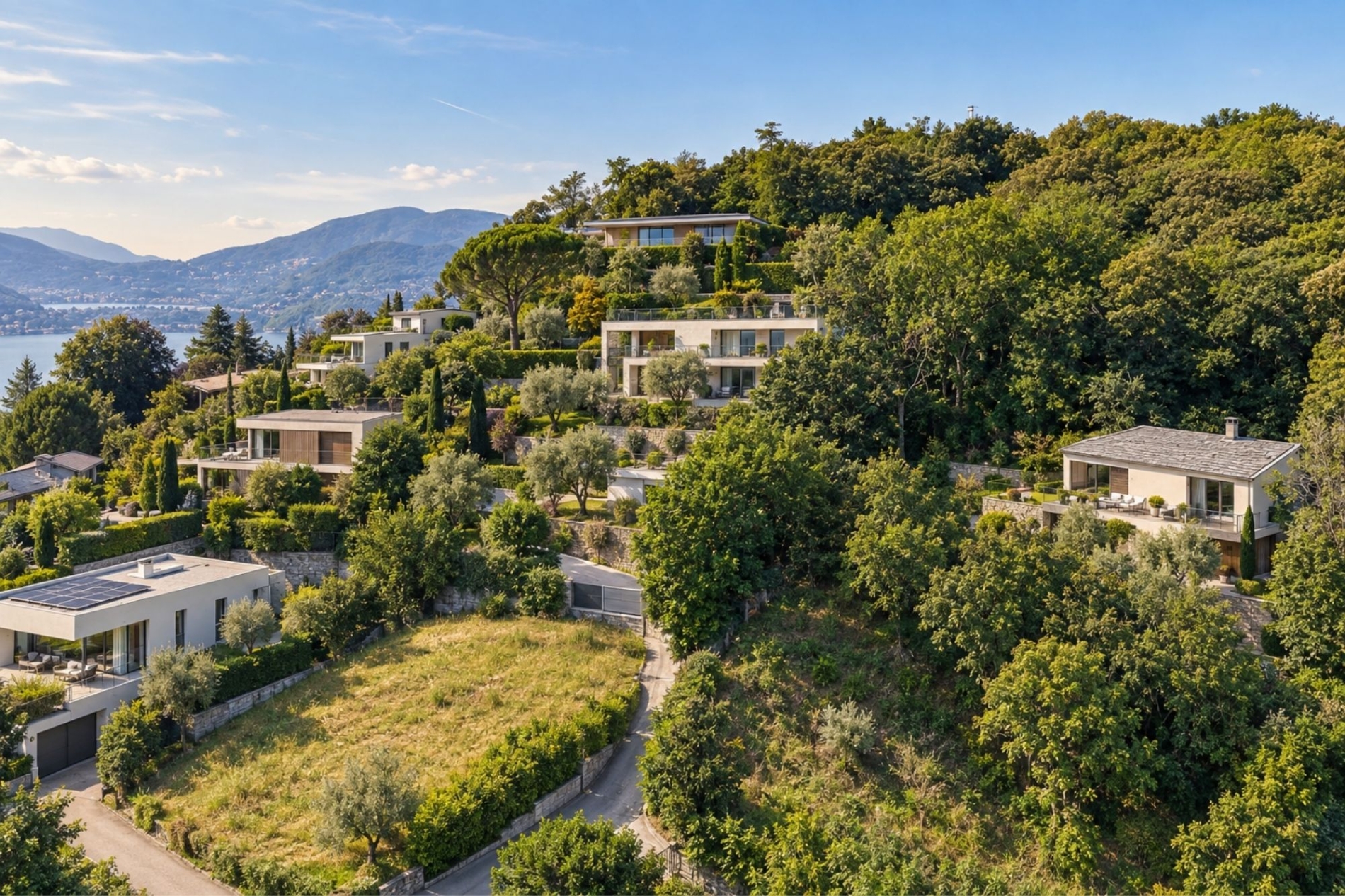
Location remains crucial: Lugano and the most sought-after residential areas
As with any other type of real estate, location remains fundamental in the land market. In the Lugano area, however, location needs to be assessed with particular precision.
Two plots located relatively close to one another can differ considerably in terms of orientation, slope, accessibility, views and development potential. The presence of the lake and the hilly nature of the region make the micro-location particularly important: even a relatively small difference in elevation or orientation can significantly affect both the living experience and the potential of a development.
In the most sought-after residential areas, the availability of land suitable for new developments is naturally limited. This scarcity can continue to support genuinely attractive opportunities, particularly where a plot makes it possible to develop homes that reflect the characteristics most valued by today's market: privacy, outdoor space, energy efficiency, architectural quality and a strong relationship with the surrounding landscape.
The same principle applies outside the locations traditionally associated with the high-end segment. In some residential areas around Lugano, access to larger plots and the opportunity to develop contemporary homes can represent an interesting alternative for families and buyers who prioritise space and quality of life over absolute proximity to the city centre.
For this reason, looking only at the average price of land is becoming increasingly insufficient. Value is created through the combination of location and genuine development potential.
MDA Group Real Estate’s perspective
The evolution of the market for undeveloped land highlights a principle that is becoming increasingly important in Ticino real estate: understanding the value of a property means fully understanding its characteristics, limitations and, above all, its potential.
For landowners, this means approaching the market with a valuation that takes into account not only surface area and location, but also the actual development possibilities. For buyers, it means carrying out a thorough analysis before committing capital, ensuring that the project they have in mind is compatible with both the characteristics of the plot and the applicable planning framework.
In this context, the role of real estate advisory naturally extends beyond the transaction itself. MDA Group Real Estate supports owners, buyers and investors in interpreting the Ticino property market by assessing the specific characteristics of each opportunity, with particular attention to location, development potential and the relationship between price and value.
The 2026 market appears increasingly reluctant to recognise value based on expectations alone and more focused on the genuine quality of each opportunity. In the case of land, this principle becomes particularly clear: an available plot does not necessarily equate to a plot that can be effectively developed and enhanced.
Understanding this distinction before buying or selling is what can transform a piece of land from a simple real estate asset into a project capable of creating value over time.
Read the other news:
- BUILDING LAND IN TICINO: HOW THE MARKET IS CHANGING AND WHAT TO CONSIDER BEFORE BUYING
- TICINO REAL ESTATE MARKET: FIRST HALF OF 2026 REVIEW AND OUTLOOK
- THE HOME MADE FOR ENTERTAINING: HOW HIGH-END LIVING SPACES ARE EVOLVING IN TICINO
- TICINO REAL ESTATE INDEX: UNDERSTANDING THE MARKET THROUGH DATA
- TWO VILLAS, ONE SIGNATURE: QUALITY
- FROM NORTHERN EUROPE (AND SOUTH AMERICA) TO LUGANO: WHY SUBSTANTIAL WEALTH IS CHOOSING THE CERESIO
- SUMMER IN LUGANO: A HOME BETWEEN THE LAKE, NATURE AND RELAXATION
- LIVING OUTDOOR SPACES: GARDENS, TERRACES AND OUTDOOR LIVING IN TICINO HOMES
- WHY MORE AND MORE ENTREPRENEURS ARE CHOOSING LUGANO TO LIVE AND INVEST
- SELLING YOUR HOME IN TICINO IN 2026: HOW TO MAXIMISE THE VALUE OF YOUR PROPERTY
- LUXURY HOMES IN TICINO: WHAT TRULY MAKES A PROPERTY PREMIUM
- GROWING ITALIAN INTEREST IN TICINO