
SELLING LAND IN TICINO: HOW TO MAXIMISE ITS VALUE IN AN INCREASINGLY SELECTIVE MARKET
28/09/2026
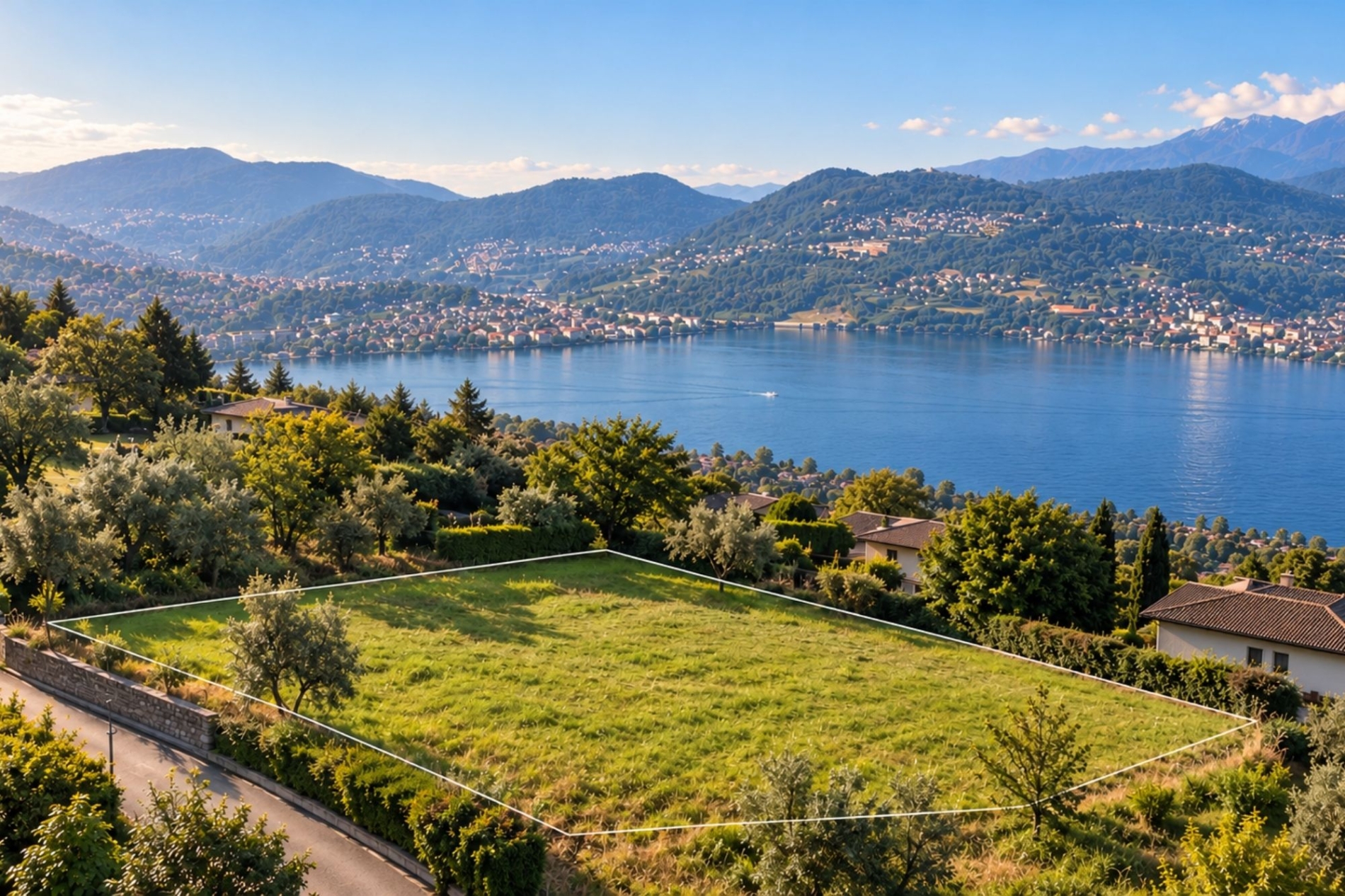
Owning a plot of land in Ticino can represent a significant asset. The availability of building land is limited, particularly in the most sought-after residential areas, and for many owners, a plot purchased years ago, inherited or simply left undeveloped over time may now represent an opportunity worth exploring.
But what is it really worth?
The answer is less straightforward than it may seem. In today's market, surface area and location alone are no longer enough to determine the value of a plot. Actual development potential, the characteristics of the site, the planning framework and, above all, what a prospective buyer can realistically build all play an increasingly important role.
Data from the second quarter of 2026 provides an interesting snapshot: in Ticino, the number of transactions involving undeveloped plots increased by 15%, while their total transaction value fell by 1.4%, settling at around CHF 47.2 million.
These two seemingly contrasting trends provide a useful insight into how the market is evolving. Transactions are still taking place, but opportunities are being assessed more selectively. For landowners considering a sale, this means that entering the market at the right price and with a clear understanding of the property's potential has become even more important.
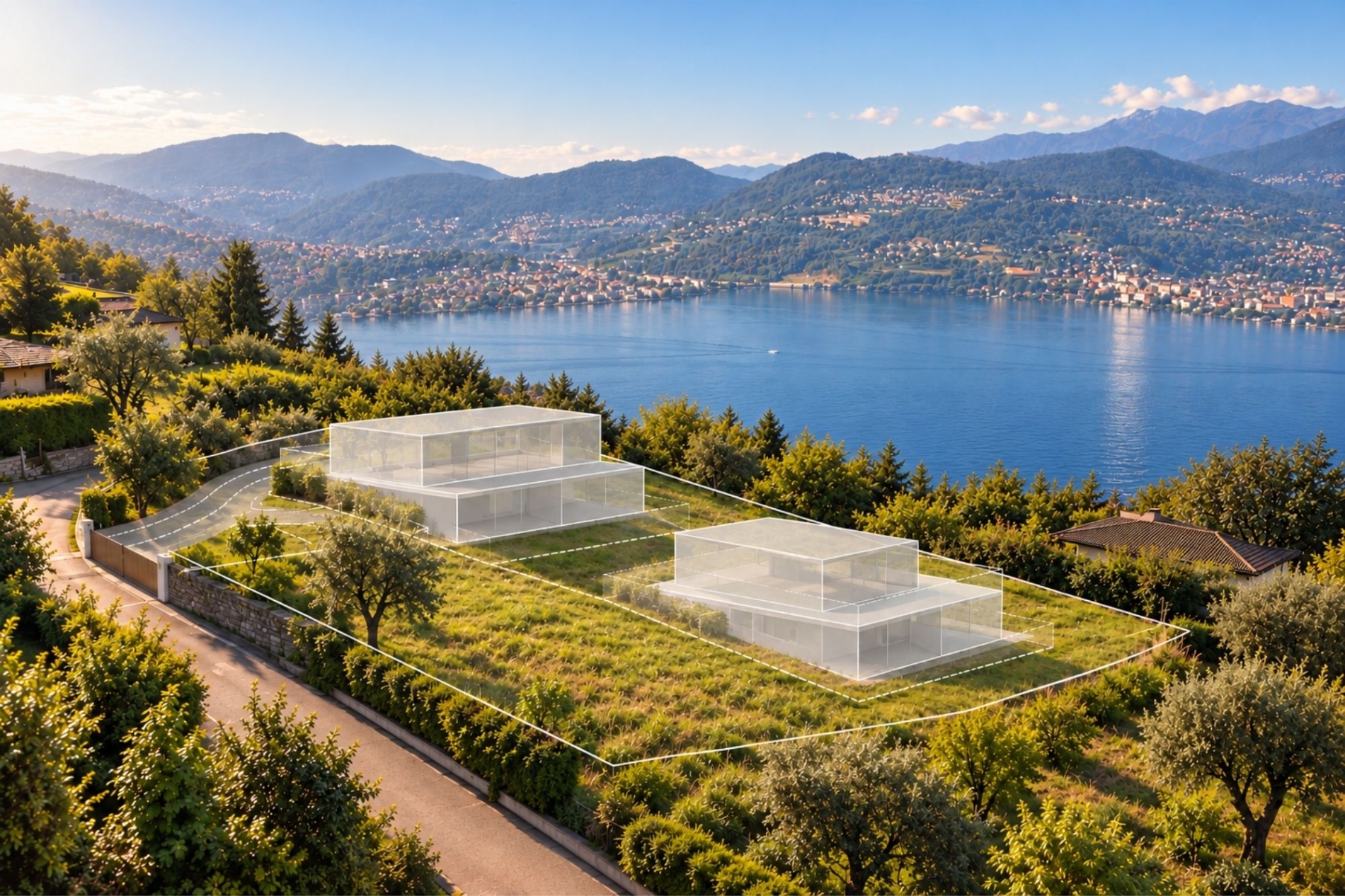
Value lies not only in the square metres, but in what can be built
When selling an apartment, many of the elements that determine its value are immediately visible: living space, number of rooms, condition of the interiors, floor, orientation, terrace, views and the quality of the building.
With land, the assessment is different.
A buyer is not simply purchasing what they see today, but above all what they may be able to create in the future. This is why two plots of the same size, even if located relatively close to one another, can have very different values.
Development ratios, required distances, permitted building heights, easements, accessibility, topography and slope are just some of the factors that can affect the feasibility and economics of a future project.
The planning framework adds another important dimension. The classification of a plot is only the starting point: understanding its true potential requires an assessment of the applicable regulations and of what can realistically be developed.
For an owner, this analysis can make a significant difference. Presenting a property simply as a “1,000-square-metre building plot” communicates far less than being able to demonstrate, with clear and accurate information, what type of project could potentially be developed.
In other words, before deciding how much to ask for a plot of land, it is worth understanding what the buyer is actually purchasing.
Pricing too high or too low: the two risks for sellers
One of the most delicate aspects of selling land is, naturally, setting the price.
The first risk is undervaluation. An owner may rely on the price paid many years ago, average values in the area or a simple comparison with other plots, without considering specific characteristics that could increase the potential of their property.
Good orientation, an attractive view, convenient access or particular development possibilities can significantly influence a plot's appeal. The same applies to land located in an area where the availability of new building plots is especially limited.
The opposite risk is overvaluation.
The scarcity of land can create the impression that any building plot can command a very high price. However, the 2026 market is increasingly focused on the relationship between asking price and actual development potential. An investor or private buyer planning to build will inevitably consider not only the cost of acquiring the land, but also design, construction, financing, any necessary site works and the eventual value of the completed property.
If the price of the land makes the overall project economically unsustainable, buyer interest may weaken even when the location itself is attractive.
Accurate initial positioning is therefore strategic. The objective should not simply be to assign the highest possible price to the land, but to establish a value that reflects its potential while remaining consistent with the economics of a realistic development.

Selling land also means communicating its potential
Another aspect is often underestimated: how the land is presented to the market.
A house can be photographed, furnished, enhanced through home staging and presented through its rooms and lifestyle. An empty plot requires a different approach, because much of its value still exists only as potential.
Effective marketing should therefore help prospective buyers understand what that land could become.
Documentation plays a central role. Planning information, site plans, the characteristics of the plot, access, easements and details regarding development potential can reduce uncertainty and make the opportunity easier to assess.
In some cases, it may also be useful to consider potential development options before bringing the land to market. Without necessarily producing a final architectural project, understanding which type of property could be suitable for the site can also help identify the most relevant buyer profile.
A plot suited to the construction of a villa for an international family, for example, requires a different strategy from a site where developing several residential units may be more appropriate.
The sale therefore becomes less about the amount of land available and more about the ability to present a tangible real estate opportunity.

MDA Group Real Estate’s Perspective
Perhaps more than any other real estate segment, the land market demonstrates why an accurate valuation cannot be reduced to an average price per square metre.
For owners of land in Ticino, the first step before selling should be to understand its potential in depth: location and micro-location, physical characteristics, development possibilities, demand within the area and the economic viability of a potential project.
This analysis provides the foundation for appropriate market positioning.
For MDA Group Real Estate, enhancing the value of a plot means identifying the characteristics that make that specific property relevant to the market, combining local knowledge, real estate data and an understanding of the needs of buyers and investors.
In some cases, value may derive from the rarity of the location; in others, from development potential, available surface area or the possibility of creating a project aligned with local demand. Identifying these factors makes it possible not only to establish a more informed asking price, but also to develop a sales strategy aimed at the most appropriate audience.
In an increasingly selective market, owning building land remains a significant advantage. But it is the ability to understand, document and communicate its potential effectively that can transform a simple plot into a real estate opportunity recognised by the market.
Read the other news:
- BUILDING LAND IN TICINO: HOW THE MARKET IS CHANGING AND WHAT TO CONSIDER BEFORE BUYING
- SELLING LAND IN TICINO: HOW TO MAXIMISE ITS VALUE IN AN INCREASINGLY SELECTIVE MARKET
- TICINO REAL ESTATE MARKET: FIRST HALF OF 2026 REVIEW AND OUTLOOK
- THE HOME MADE FOR ENTERTAINING: HOW HIGH-END LIVING SPACES ARE EVOLVING IN TICINO
- TICINO REAL ESTATE INDEX: UNDERSTANDING THE MARKET THROUGH DATA
- TWO VILLAS, ONE SIGNATURE: QUALITY
- FROM NORTHERN EUROPE (AND SOUTH AMERICA) TO LUGANO: WHY SUBSTANTIAL WEALTH IS CHOOSING THE CERESIO
- SUMMER IN LUGANO: A HOME BETWEEN THE LAKE, NATURE AND RELAXATION
- LIVING OUTDOOR SPACES: GARDENS, TERRACES AND OUTDOOR LIVING IN TICINO HOMES
- WHY MORE AND MORE ENTREPRENEURS ARE CHOOSING LUGANO TO LIVE AND INVEST
- SELLING YOUR HOME IN TICINO IN 2026: HOW TO MAXIMISE THE VALUE OF YOUR PROPERTY
- LUXURY HOMES IN TICINO: WHAT TRULY MAKES A PROPERTY PREMIUM