
MORTGAGES AND MORTGAGE INTEREST RATES IN SWITZERLAND: THE SITUATION IN OCTOBER 2026
30/10/2026
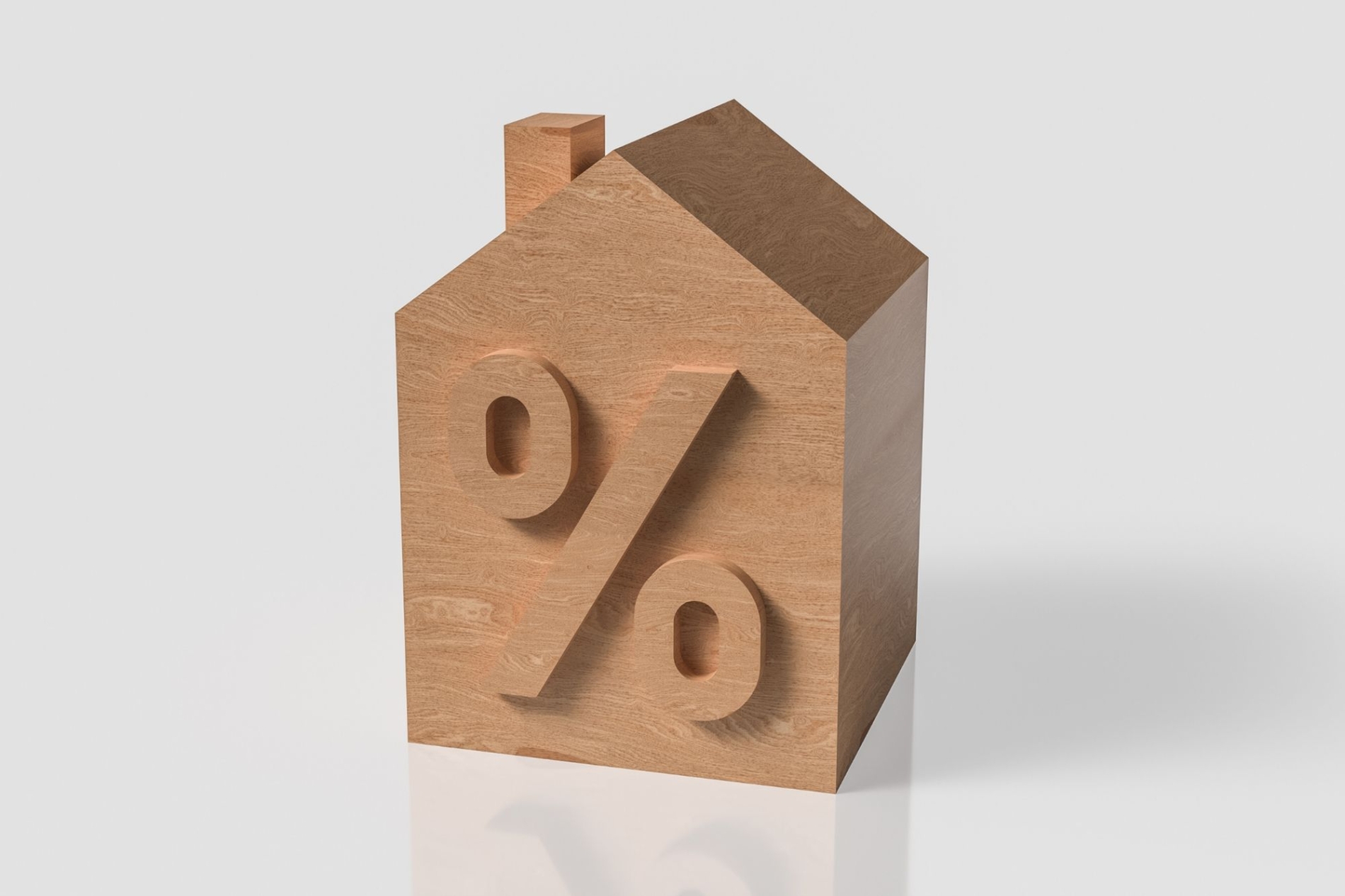
Buying a home is one of the most important decisions a person can make. Whether it is a first home, a property better suited to changing family needs or a real estate investment, the decision involves much more than location, living space and the characteristics of the property itself. Financing conditions play an equally important role, as they can significantly influence the affordability of a purchase and long-term financial planning.
In Switzerland, mortgage interest rates are therefore an important factor to monitor, not only for those looking to buy a property but also for homeowners approaching the renewal of an existing mortgage. Understanding how interest rates evolve, which factors influence them and what opportunities the market offers makes it possible to approach these decisions with greater confidence.
In October 2026, the Swiss mortgage market is experiencing a period of relative stability. In mid-October, the reference rate used by banks to calculate ten-year fixed-rate mortgages, the 10-year CHF interest rate swap (IRS), stands at approximately 0.89%, virtually unchanged from 0.88% the previous week. This suggests continuity in the underlying financing conditions, although the broader international environment remains characterised by a degree of uncertainty.
Central bank decisions, inflation trends and developments in bond markets continue to influence the outlook for interest rates, even in a country traditionally associated with financial stability such as Switzerland.
What, then, is the situation in October 2026, and what does it mean in practical terms for those looking to buy a home or renew a mortgage in Ticino?
Fixed-Rate Mortgages: A Stable October
In the Swiss market, fixed-rate mortgages are a particularly attractive option for those who want to know the cost of their financing in advance. Choosing a term of five, seven or ten years provides protection against potential interest rate fluctuations throughout the contractual period, making household financial planning more predictable.
Mid-October figures confirm a relatively calm environment. The ten-year CHF IRS, one of the main benchmarks used to determine long-term fixed mortgage rates, stands at 0.89%, a change of just 0.01 percentage points compared with the previous week.
It is important to distinguish this benchmark from the interest rate actually offered to a borrower. The IRS represents one component of the financing cost, to which banks add their own margin and other considerations relating to the mortgage term, the borrower's financial profile and the characteristics of the transaction.
Two buyers applying for a mortgage at the same time may therefore receive different offers, even when the general interest rate environment is identical.
Nevertheless, the relative stability of market benchmarks provides useful context for those planning a property purchase. It allows buyers to assess alternatives more clearly, compare different financing structures and determine how much certainty they want over the coming years.
This does not necessarily mean that there is one universally correct choice. A long-term fixed-rate mortgage may suit those who prioritise predictable payments, while other solutions may better meet the needs of borrowers seeking greater flexibility. The decision depends on the property project, the investment horizon and the buyer's individual financial circumstances.

Switzerland Looks to the United States: Why International Markets Matter
To understand the evolution of Swiss mortgage rates, it is necessary to look beyond national borders. Fixed-rate mortgage conditions do not depend exclusively on decisions made by the Swiss National Bank; they are also influenced by developments in international capital markets.
During 2026, long-term interest rates have experienced some upward pressure. By the end of September, the average indicative rate for a ten-year fixed-rate mortgage in Switzerland had reached 2.07%, while the five-year rate stood at 1.90%. This represented an increase compared with previous months, largely reflecting higher financing costs in capital markets.
The United States plays an important role in this context. Expectations surrounding future decisions by the Federal Reserve influence bond yields and, indirectly, financial conditions in other countries.
The relationship is not automatic: an increase in US interest rates does not necessarily lead to an immediate or proportional rise in Swiss mortgage rates. However, when upward pressure on international bond yields increases, the Swiss market may also be affected.
It is precisely this interdependence that makes the current environment worth monitoring. Swiss benchmark rates may remain relatively stable for several weeks, even as expectations in financial markets continue to shift.
For those choosing a mortgage, this means that timing matters, but it should not be the only consideration. Trying to identify the perfect day to lock in an interest rate is extremely difficult. A more useful approach is to assess whether the available conditions are compatible with the property project and the level of risk the borrower is willing to accept.
The Role of the Swiss National Bank and the Outlook for the Coming Months
Domestically, monetary conditions remain relatively favourable. At its meeting on 24 September 2026, the Swiss National Bank maintained its policy rate at 0%, considering the prevailing monetary conditions appropriate for preserving price stability and supporting the economy.
Swiss inflation remains contained compared with that observed in many other economies, although it has increased moderately during the year, mainly due to energy prices. According to the SNB's assessment, medium-term inflationary pressures remain limited.
This helps explain why Switzerland continues to benefit from a relatively stable financial environment despite international tensions.
However, it is important to distinguish between the SNB policy rate and the mortgage rates offered by banks. The former primarily influences short-term borrowing costs and mortgages linked to SARON. Long-term fixed-rate mortgages, on the other hand, are more strongly affected by expectations reflected in swap rates and bond yields.
It is therefore possible for the policy rate to remain unchanged while the conditions offered for a ten-year fixed-rate mortgage evolve.
Looking towards the end of 2026, the outlook calls for caution rather than alarm. There is insufficient evidence to predict an imminent increase in Swiss interest rates with certainty, but neither can the current stability be taken for granted.
Decisions by major central banks, inflation developments and conditions in bond markets will continue to play a decisive role.

Buying a Home or Renewing a Mortgage: How to Interpret the Current Market
For those looking to purchase a property in Lugano or elsewhere in Ticino, financing conditions are an essential part of the overall real estate assessment.
The purchase price is only one of the factors to consider. The affordability of a transaction also depends on the buyer's available equity, the mortgage amount, the financing term, any required repayments and the ongoing costs of maintaining the property.
Even seemingly small differences in interest rates can have a significant impact over time. On a mortgage of CHF 800,000, for example, a change of 0.25 percentage points corresponds to CHF 2,000 more or less in annual interest payments, assuming the outstanding loan amount remains unchanged.
This is why it is important to compare different mortgage offers rather than focusing exclusively on the advertised interest rate.
A ten-year fixed-rate mortgage may offer greater peace of mind to those who want to plan their expenses precisely. A shorter term may be more suitable for borrowers anticipating changes in their financial or housing circumstances. A SARON-linked mortgage, meanwhile, has different characteristics and requires a greater willingness to accept potential fluctuations in interest costs.
Existing homeowners should also pay attention to the maturity date of their mortgage. Exploring the available alternatives well in advance allows them to compare offers, consider possible early renewal options and make a decision without the pressure of an approaching deadline.
This does not mean that immediately locking in a rate is always the best solution. Rather, it means that an informed decision comes from preparation, not from trying to predict the market perfectly.

MDA Group Real Estate's Perspective
Mortgage rate developments in October 2026 highlight a fundamental principle of the real estate market: the value of a property purchase cannot be assessed independently of its financing conditions.
A property may represent an attractive opportunity because of its location, construction quality and potential for long-term appreciation, but the financial sustainability of the investment also depends on the chosen financing structure.
For this reason, MDA Group Real Estate approaches property acquisitions by considering not only the characteristics of the property and its appropriate market positioning, but also the broader economic environment in which the transaction takes place.
For those looking to buy a home in Lugano or elsewhere in Ticino, this means approaching the search with a comprehensive perspective: identifying the most suitable property, understanding its value, assessing the affordability of the investment and coordinating financing matters with qualified financial professionals.
The same principle applies to investment properties. In these cases, the cost of capital directly affects the economic balance of the transaction and must be considered alongside expected returns, operating costs and the outlook for the local property market.
The relative stability of interest rates observed in mid-October provides an environment in which buyers can plan carefully, without necessarily rushing their decisions. At the same time, international uncertainties serve as a reminder of the importance of maintaining a medium- to long-term perspective.
The right time to buy does not necessarily coincide with the lowest interest rate, but with the combination of a valuable property, sustainable financing conditions and a clearly defined real estate project.
It is this balance that forms the foundation of sound property decisions, regardless of fluctuations in financial markets.
Read the other news:
- MORTGAGES AND MORTGAGE INTEREST RATES IN SWITZERLAND: THE SITUATION IN OCTOBER 2026
- LIVING IN PREGASSONA, SONVICO AND BARBENGO: RESIDENTIAL NEIGHBOURHOODS AROUND LUGANO
- BUILDING LAND IN TICINO: HOW THE MARKET IS CHANGING AND WHAT TO CONSIDER BEFORE BUYING
- SELLING LAND IN TICINO: HOW TO MAXIMISE ITS VALUE IN AN INCREASINGLY SELECTIVE MARKET
- TICINO REAL ESTATE MARKET: FIRST HALF OF 2026 REVIEW AND OUTLOOK
- THE HOME MADE FOR ENTERTAINING: HOW HIGH-END LIVING SPACES ARE EVOLVING IN TICINO
- TICINO REAL ESTATE INDEX: UNDERSTANDING THE MARKET THROUGH DATA
- TWO VILLAS, ONE SIGNATURE: QUALITY
- FROM NORTHERN EUROPE (AND SOUTH AMERICA) TO LUGANO: WHY SUBSTANTIAL WEALTH IS CHOOSING THE CERESIO
- SUMMER IN LUGANO: A HOME BETWEEN THE LAKE, NATURE AND RELAXATION
- LIVING OUTDOOR SPACES: GARDENS, TERRACES AND OUTDOOR LIVING IN TICINO HOMES
- WHY MORE AND MORE ENTREPRENEURS ARE CHOOSING LUGANO TO LIVE AND INVEST